

Health PDF Print E-mail

Life is very hard for those living in the Thar Desert and this inevitably causes severe health problems. Accordingly, GRAVIS has been expanding its health education initiatives and health services each year since it began its first health project in 1990. In addition, GRAVIS cooperates with local, regional and national partners (governmental agencies, other NGOs etc.) to link rural communities with health services to further the sustainability of community health services and mobilize the rural people of the Thar towards self-sufficiency.

GRAVIS Hospital

The GRAVIS hospital located in Tinwari was established in 2000 through contributions from various donors and international agencies. The hospital is key in providing the only professional medical services available to a population of more than 200,000 people living in the area. GRAVIS' field based medical programs work to identify and link patients in need with the hospital for major and minor surgeries (i.e. orthopedic, intestinal, labor-related), treat diseases (i.e. Malaria, TB, Hepatitis), treat deficit states (i.e. malnutrition, anemia) and supervise pregnancies (i.e. ante-natal checks, safe delivery, post natal care). The hospital is equipped with a highly trained staff, including 8 medical doctors, and 15 other personnel covering the administrative, technical and ambulatory departments. The GRAVIS hospital has 50 beds, 6 examination rooms, a laboratory, a labor room, a fully equipped operation theater, a minor operation theater, as well as a sonography and X-ray unit. In addition, in 2003, GRAVIS established an adjoining hospital staff residential area with 6 apartments and a training hall used for training sessions for village health workers and eye workers. Medical services are provided by the hospital at a minimal price, and at times, at no cost to destitute, to allow all members of the local community access to healthcare.

Eye Care

In August 2003, GRAVIS launched a fully equipped eye care unit at the GRAVIS hospital as well as a community eye health program. The eye care unit at the hospital has full surgical and diagnostic equipments, 1 ophthalmologist, and 4 ophthalmic assistants. From August 2003 to March 2004 the eye care unit performed over 900 eye operations, the majority of these being Short Incision Cataract Surgeries (SICS), in which an Intra Ocular Lens (IOL) is implanted in the patient's eye.

The community eye health program is complimentary to the eye care unit in the hospital and is used to generate awareness and educate rural villagers about eye care and eye problems, as well as to identify and link patients with the GRAVIS hospital eye unit through GRAVIS-trained village eye workers. GRAVIS succesfully implemented a CEH programme in Sankra block which ended in 2006.currently, it is implementing its next CEH programme in Baap block of Jodhpur. GRAVIS hospital till date has performed over 8,000 eye surgeries.

Village Health Workers

GRAVIS trains Village Health Workers (VHW) in a wide range of general health practices - first-aid, prescription of appropriate over-the-counter medicine, recognition of diseases and childbirth complications, and development of hygiene awareness. 90% of the 350 VHWs that GRAVIS has trained are women and all are from the rural communities that they work in, have comparatively better level of education, and a strong desire to aid those in need. VHWs are a quintessential element for GRAVIS' health care initiatives in rural areas and have the trust of their respective communities, enabling them to overcome some of the village skepticism regarding modern medicine and health practices. GRAVIS staff members conduct frequent VHW training programs in the newly conducted training hall at the GRAVIS hospital and in the villages, to refresh and supplement the VHWs knowledge.


Khoj

After a final evaluation, the ten-year long Khoj project completed its final phase in August 2003. Khoj, or "search" in English, was a GRAVIS rural health program that focused primarily on the welfare of women and children, especially on that of female children. Many GRAVIS activities were realized under the banner of Khoj including medical camps, VHW trainings, assorted rallies, and the distribution of contraceptives. Funding for the Khoj program was supplied by the Voluntary Health Association of India (VHAI) and GRAVIS was one of its first three partners (of over 20 in total) in India.

Integrated Nutrition and Health Programme

The Integrated Nutrition and Health Programme (INHP), was first implemented by GRAVIS in 1998 through the Integrated Child Development Scheme (ICDS) of the Government of Rajasthan and receives its funding from the Centre for Advancement and Relief Everywhere (CARE). The INHP provides grassroots, technical, capacity building and administrative support to the ICDS program, which in turn provides immunizations and nutritional supplements to pregnant women, lactating mothers, and children less than 2 years of age, as well as supplying learning materials to adolescent girls. It also sensitizes people, builds the capacity of stakeholders and bridges the gap between the service providers (i.e. the government and the beneficiaries). In this way, GRAVIS' involvement with the INHP not only addresses health concerns, but also acts to mobilize the rural community towards self-sufficiency. This partnership is a prime example of the benefits garnered from the cooperation of state, voluntary organization, and community. In the first year of the INHP, more than 40 Anganwadi centers were developed to a level of self-sustainability, which means the villagers themselves were managing the whole show of demand and supply of services and supplementary nutrition.

Currently, GRAVIS is implementing the second phase of the INHP in 90 villages in Phalodi, Balesar, Shergarh, Baap, Osian and Bhopalgarh blocks of Jodhpur, through 90 Anganwadi centers (government operated stations in which nutritional and medical resources are supplied).

Safe Motherhood and Child Survival

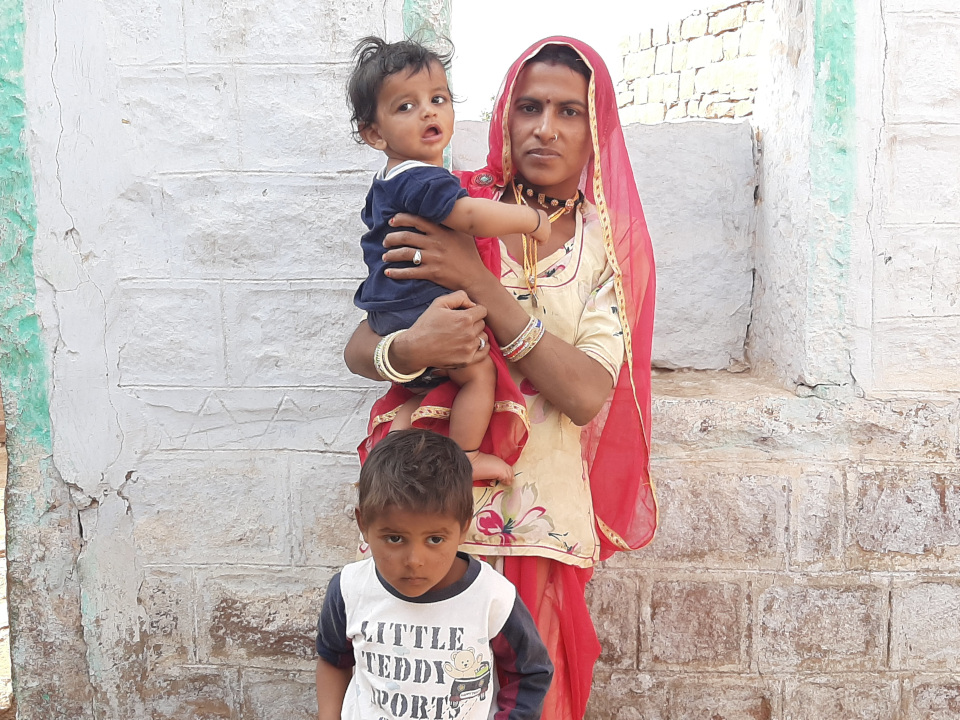
The Safe Motherhood and Children Survival (SMCS) programme aims to specifically aid and support the needs of pregnant women, lactating mothers, and children in the age group of 6 months to 2 years. Run in collaboration with Catholic Relief Services (CRS), this programme provides nutritional support for the above mentioned target group as well as conducting pregnancy awareness camps and training sessions for dais (midwives). As the lack of awareness around women's health and services for pregnant women and children is a common problem, GRAVIS field workers inform pregnant women and new mothers of the resources available at their local Public Health Centers (PHCs) - PHCs are government run institutions that provide free vaccinations for infants and pregnant women. In addition, GRAVIS distributes iron-folic acid tablets to women during and after their pregnancy in order to treat or circumvent anemia, a common ailment among pregnant women in rural areas. The SMCS Program operates in 20 villages of the Jodhpur district.

Crèchess

GRAVIS runs and manages 12 crèche units providing supplementary nutrition and health check ups for the children of poor working mothers. The crèche units take care of 360 children under the age of five in 10 villages of Osian Development Block of Jodhpur district. Each crèche unit is managed by two local women who were identified and trained by GRAVIS for this particular purpose. This program is run in assistance with the Central Social Welfare Board of the Government of India.

Adolescent Girls' Health Education Programme

The Adolescent Girls Health Education Program was started by GRAVIS on a pilot basis through the INHP. A total of 20 groups of adolescent girls have been formed in 20 villages in the Baap and Phalodi blocks of Jodhpur. Each of the adolescent girl groups consists of 10 - 15 girls, all of whom are 12 - 16 years old. GRAVIS field staff, specifically trained on issues of adolescent health, provide regular trainings to educate the girls on reproductive health and hygiene, and have made great efforts in helping them understand and accept the physiological and psychological changes that take place in adolescence. The girls are asked to spread the lessons they learn in the training sessions to other girls in the village. This is an important activity to improve the reproductive health status of the region.

TB Control Programme

Tuberculosis (TB) is a severe health problem in India, particularly in rural areas of the Thar Desert. Poor hygienic conditions, inadequate quality of nutrition, and lack of curative and diagnostic facilities, exacerbated by low levels of education and awareness of the disease, renders TB one of the significant causes of death.

TB is, however, a highly curable disease if diagnosed at an early stage and if the patient maintains the treatment regime. The Government of India has organized the Revised National Tuberculosis Programme (RNTCP), which includes Directly Observed Treatment Short Course Chemotherapy (DOTS) Programme to combat the widespread problem of TB. GRAVIS has been registered as a partner organization under RNTCP. GRAVIS organizes TB awareness camps, in which resource teams explain the biological facts, prophylactic measures, and treatment methods, and also disseminates information on TB to the VHWs and at Village Development Committee meetings. In addition, GRAVIS has developed a team of 20 DOTS workers who are trained by the Government Tuberculosis Control Department. The team is made up of all former village level workers who are familiar with the status of TB in their respective communities. These DOTS workers are responsible for identifying the potentially infected patients, referring them to the proper institutions, monitoring TB patients and recording treatment progress. Currently, GRAVIS is also running a TB control project focusing on screening and education with the support of WHO, Geneva.

Occupational Lung Diseases

GRAVIS actively works to provide mineworkers in the Jodhpur and Makrana mines with health education on, as well as the diagnosis and treatment of, occupational lung diseases, such as silicosis and tuberculosis. Occupational lung diseases are widespread among the mineworkers because of the high amounts of dust inhaled by mineworkers due to the practice of dry drilling and a complete lack of precautionary measures. TB and silicosis awareness camps, and health camps for identifying patients for treatment are regularly conducted by GRAVIS.

Malaria Control

The year 2003 saw the end of the four-year long drought in the Thar Desert, with better than average rainfall in almost the whole area, though there were pockets which received only one spell of good showers instead of the normal three. The result was the endemic spread of malaria in the villages, especially those of the Jaisalmer and Barmer districts. People did not seek medical help until the situation was out of hand for fear of losing agricultural labour in the fields. With the support of Wells for India, UK, GRAVIS took immediate relief action and organised 39 medical camps focusing on Malaria control in remotest villages of Jaisalmer and Nadmer district. 1,687 Malaria patients were treated by the efforts of GRAVIS.

Geriatric Health

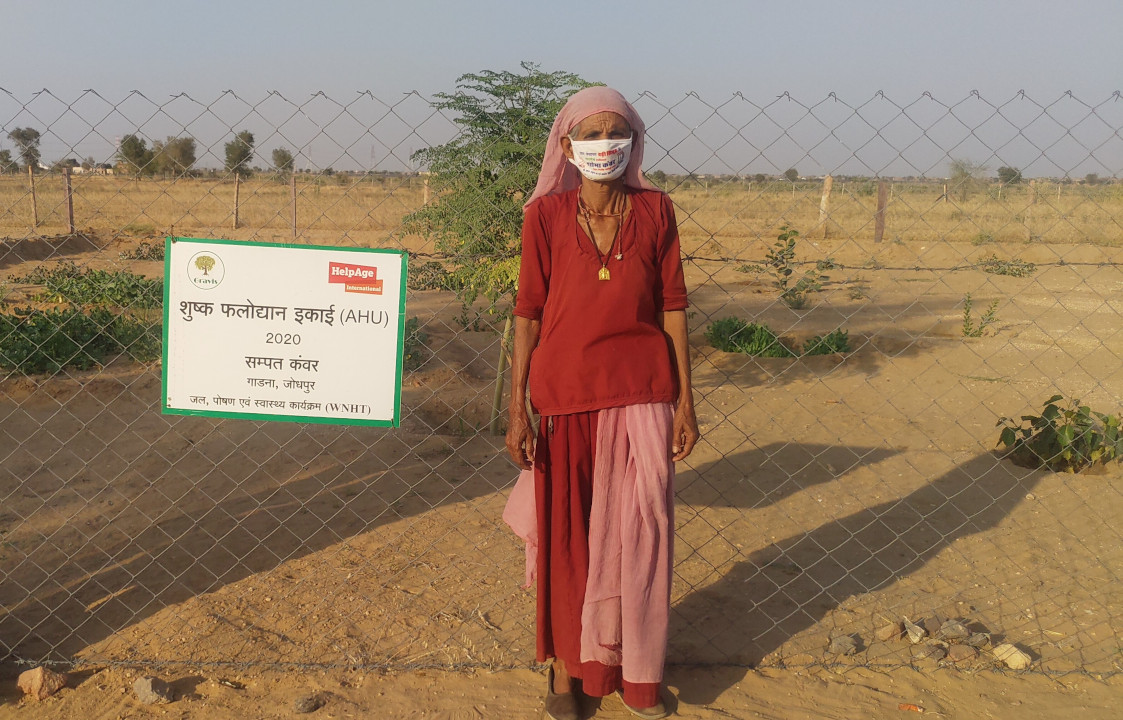
In 2003-2004 GRAVIS began much needed health initiatives specifically targeted at the elderly. A major part of GRAVIS' Assimilated Development of Older People in the Thar Desert (ADOPT) project is health education geared towards the elderly and linking older people to health facilities when needed. In addition, 70-80% of the beneficiaries of GRAVIS' eye care initiatives are elderly patients over the age 60 years old with degenerative eye problems such as cataracts. Between August 2003 and March 2004, over 3,600 older people received health education and/or health services from GRAVIS.

Community led health monitoring

To monitor the work of the National Rural Health Mission (NRHM) of Govt . of India, GRAVIS has been given the responsibility of the monitoring NGO in Jodhpur district. Under this, GRAVIS is training the communities so that they can monitor the health services independantly. GRAVIS is also the Mother NGO for the Reproductive and Child Health (RCH) services of Govt. of India for the District of Jodhpur.       

A health training

A health training

GRAVIS hospital at Tinwari

GRAVIS hospital at Tinwari

Safe motherhood and child safety program

Safe motherhood and child safety program

A health and nutrition day

A health and nutrition day

Health camp in a school

Health camp in a school

A child after eye surgery

A child after eye surgery

Woman patient at GRAVIS hospital

Woman patient at GRAVIS hospital


GRAVIS believes in the reconstruction of rural communities, their institutions and their environment so that villagers have ownership and control over their future.